Beyond the Guidebook · Accessibility
Can You Take a River Cruise With Limited Mobility?
Gina Renée Langlinais · · 7 min read
 River Cruise
Yes, sometimes, but the ship is only part of the answer.
Yes, sometimes, but the ship is only part of the answer.
One of the questions travelers sometimes ask about river cruising is whether someone who uses a cane, walker, or wheelchair can take one.
The honest answer is: possibly.
I do not want someone to dismiss a river cruise simply because walking has become more difficult. But I also would never tell someone, “The ship has an elevator, so you’ll be fine.”
An elevator helps, but it does not make the entire journey accessible.
The right question is not simply, “Can I get around the ship?” It is:
Can I safely manage the ship, the gangway, the motorcoach, the walking surfaces, and the excursions included in this particular itinerary?
Those are very different questions.
Limited mobility is not the same for every traveler
Someone who walks slowly, uses a cane, or relies on a walker may be able to enjoy a river cruise with thoughtful planning. An occasional wheelchair user who can stand, transfer, and walk short distances may also have options.
However, many traditional European river cruises are not suitable for someone who is completely dependent on a wheelchair, cannot transfer independently, or requires another person to lift them.
Every person’s abilities are different, so this is not something that can be decided based solely on whether someone owns a wheelchair or walker.
Before booking, I would want to understand what that traveler can safely do without relying on a crew member to provide physical assistance.
The motorcoach is a major consideration
Motorcoaches are an important part of many river-cruise itineraries.
They may be used for included sightseeing tours, transportation to attractions away from the river, airport transfers, and sometimes transportation between the ship and another location.
That means one of the most practical questions is:
Can you climb several coach steps, get into a seat, and get back off without being physically lifted?
Not every excursion requires a motorcoach, but many do. If a traveler cannot board and exit the coach independently or with minimal help from their own companion, a typical European river-cruise itinerary may not be the right fit.
Even if that traveler can move comfortably around the ship, the coach may prevent them from participating in a large portion of the journey.
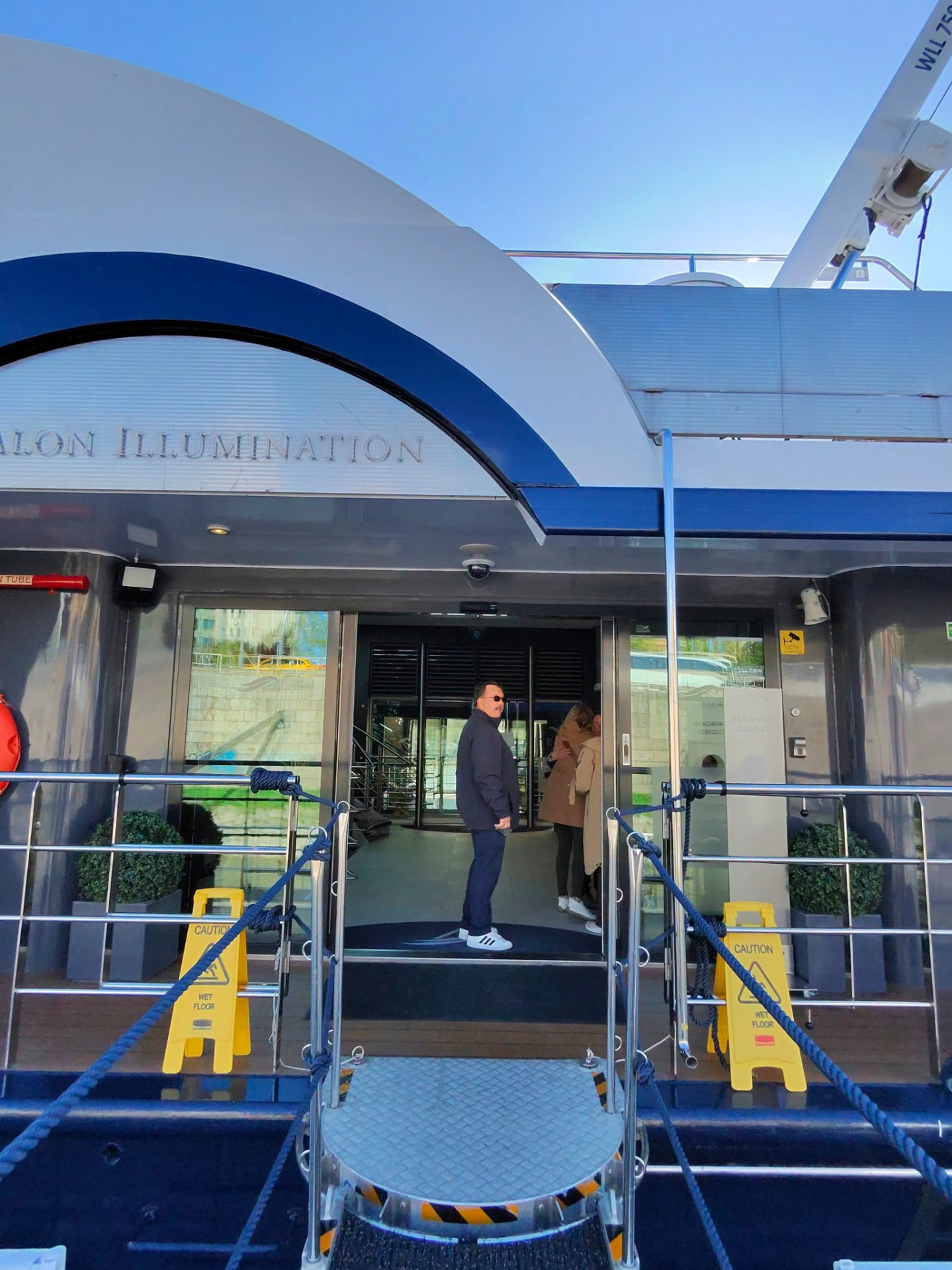
Gangways can change from one port to another
Getting on and off a river ship is not always as simple as walking across a flat ramp.
The angle of the gangway may change depending on the river level and where the ship is docked. At some stops, the incline can be surprisingly steep.
River ships may also dock next to one another. Guests sometimes have to cross through or over another ship to reach the shore. That can introduce additional ramps, steps, and uneven transitions.
A traveler needs to be prepared for conditions that may be different each day.
Europe itself may present the greatest challenge

The ship may actually be the easiest part of the trip.
Many European towns have cobblestones, uneven sidewalks, hills, steps, and historic buildings that were constructed centuries before modern accessibility standards existed.
An excursion described as an “easy walking tour” may still include surfaces that are difficult for someone using a walker. Even a short distance can become tiring when the ground is uneven.
That does not mean a traveler with limited mobility must stay on the ship. Some cruise lines offer slower-paced or reduced-walking excursions on certain sailings. Private transportation or an individually arranged tour may also be possible.
But those options must be investigated before the cruise, not assumed after arrival.
An elevator does not solve every problem
Some river ships have elevators, but the elevator may not reach every deck or outdoor area. The exact arrangement varies by cruise line and individual ship.
Cabin doors, bathroom layouts, thresholds, hallway widths, and the storage of mobility equipment also need to be considered.
This is why I would never choose a river cruise for a traveler with mobility concerns based only on the cruise line’s name. I would look at the exact ship, cabin, itinerary, and excursion requirements.
Policies also vary. A cruise line may require advance notice, an accessibility form, or a traveling companion who can provide necessary assistance.
Questions to answer before booking
Before placing a deposit, a traveler with limited mobility should honestly consider:
- Can I walk a short distance when necessary?
- Can I manage a few steps?
- Can I board and exit a motorcoach?
- Can I stand and transfer without being lifted?
- Can I navigate a sloped gangway slowly and safely?
- Can my walker or wheelchair be folded and stored if required?
- Will I be traveling with someone who can assist me?
- Am I comfortable skipping or modifying an excursion if conditions are unsuitable?
- Does the elevator on the specific ship reach the areas I need?
- Are slower-paced, reduced-walking, or private touring options available?
These questions are not intended to discourage anyone. They are intended to prevent a traveler from spending thousands of dollars on a trip that does not safely match their abilities.
Do not automatically rule it out
If you use a cane, walker, or occasional wheelchair, a river cruise may still be possible, and it may be a wonderful way to experience Europe.
The key is choosing carefully.
We need to match your individual mobility needs with the right ship, cabin, itinerary, and shore experience. We also need to verify the cruise line’s current requirements before any money is paid.
River cruising with limited mobility is not always a simple yes or no.
Sometimes the answer is yes, but the elevator is only one small part of making the entire journey work.
Share This Story
https://travelwithginarenee.com/stories/can-you-take-a-river-cruise-with-limited-mobility
Ready for a story of your own?
Plan Your Trip With Gina